


 Select your city
 Login
Login
 Select your city Login


 29 Jun 26
 by Shahid Iqbal
 0 Comments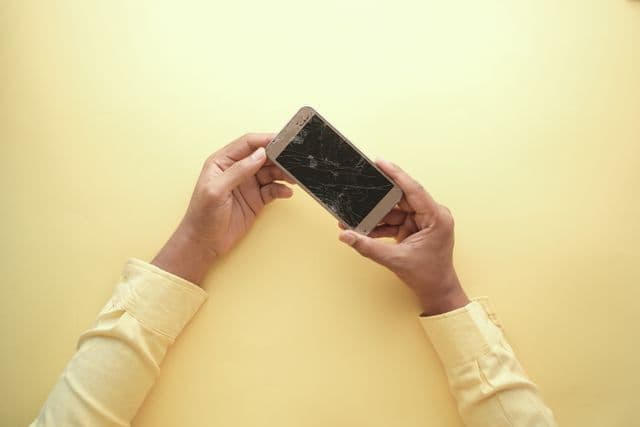
Should I repair my iPhone before selling, or is it smarter to sell it as-is with the fault? Most iPhone owners in India find this question puzzling, and the answer isn't always what you'd expect. Repairing your phone before trading it in could actually leave you worse off financially. In fact, you might end up paying ₹38,552 out of pocket in some cases. The price difference between faulty and functional phones can be substantial, but repair costs and delays can easily wipe out any possible gains.
Whether you're wondering should I fix my iPhone before trade in or should I repair my phone before trading it in, the decision requires careful financial calculation. This piece breaks down the real costs and possible returns, plus exactly which repairs make sense for Indian sellers.
Model and storage capacity are the foundations of your iPhone's worth in India's resale market. Pro and Pro Max versions command stronger offers due to upgraded cameras and displays. Storage differences between 128GB and 512GB models can create noticeable value gaps. Condition grading moves your payout substantially, with devices categorised from like new (minimal wear) to damaged (cracked screens and battery issues). Battery health plays an unexpectedly large role. Buyers check this within seconds of inspection. At the time, when battery health drops below 80%, buyers assume performance throttling and fast draining, which signal hidden costs. Timing matters just as much, with resale values strongest before September, when new iPhone launches occur and during January, when refurbished demand increases.
Screen replacement at Apple's authorised service centres costs ₹25,500 for an iPhone 16, while third-party services offer compatible screens from ₹2,799. Battery replacement through Apple ranges from ₹3,375 to ₹4,641 for newer models when done yourself, saving you ₹2,869 to ₹4,135 compared to official repair costs. Back glass repair starts from ₹2,499 for older models like iPhone 8 and reaches ₹6,999 for iPhone 15 Pro Max at third-party providers. Charging port fixes and speaker issues remain affordable, whilst advanced repairs with motherboard work may cost much more due to component-level complexity.
Average profit after smartphone screen repair across Apple, Samsung, and Google handsets is -₹8,073.52. Those repairing screens before trade-in lose money. Sellers assume repair costs will be recovered through higher resale prices, but the value increase rarely matches the expense. Repairing an iPhone 14 Pro Max 256GB screen from faulty to good condition would mean losing ₹19,913.79, as the ₹31,980.19 repair cost exceeds the ₹12,066.40 value gain by ₹19,913.79. Many sellers also overlook battery health's effect until buyers start negotiating hard, not realising that battery replacement often costs less than the resale value loss it prevents.
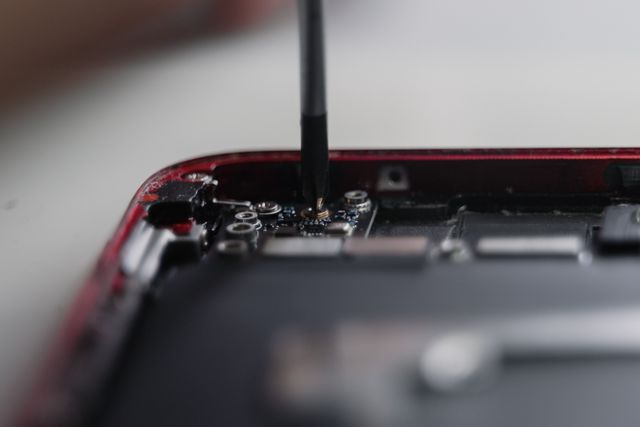
The formula determines whether repair makes financial sense: post-repair sale price minus repair cost minus current as-is value equals your net return. First, get quotes at your current condition from your preferred selling channel. Next, estimate your value after repair based on market comparisons. To cite an instance, if your phone at 78% battery health would fetch ₹35,439.79 now via buyback, and after an ₹8,353.66 battery service it reaches 85% health with comps showing ₹45,565.44, your net uplift is ₹1,771.99. But if private sales show ₹52,315.88 at 90%+ health, your net gain jumps to ₹8,522.43. The repair becomes worthwhile.
Apple's official trade-in programme offers up to ₹62,700 for iPhone 17 Pro Max or 16 Pro Max models, while iPhone 17 or 16 base variants fetch up to ₹34,000 to ₹38,500. iPhone 15 Pro Max commands up to ₹58,000, and iPhone 14 Pro Max reaches ₹50,000.
Battery health above 80% secures the full market price. Dropping below this threshold triggers deductions of ₹2,000 to ₹5,000. Screen damage without cracks can boost value by 15 to 25 percent compared to cracked devices.
Screen repairs produce an average loss of ₹8,073.52 across major smartphone brands. Repairing an iPhone 14 Pro Max 256GB screen costs ₹31,980.19 but increases value by only ₹12,066.40, then leaving you ₹19,913.79 worse off.
Screen repairs produce negative returns across most iPhone models. The iPhone 15 Pro 512GB is the only exception and yields ₹253.14 profit after repair from faulty to good condition. Then, models like the iPhone 14 Pro Max 256GB lose you ₹19,913.79 when repair costs ₹31,980.19 but value increases only ₹12,066.40. Third-party replacements starting from ₹2,799 still rarely justify the expense.
Battery replacement delivers consistent profitability. The iPhone 15 Pro 512GB gains ₹19,660.65 post-repair, while iPhone 13 models see ₹1,265.71 net profit when using third-party services at ₹5,484.73. Apple charges ₹8,353.66 for newer models, yet third-party options from ₹3,375.22 ensure positive returns.
Back glass repairs cost ₹2,499 to ₹6,999 depending on model. The iPhone 15 Pro 512GB achieves ₹13,754.01 gain. The iPhone 14 Pro Max 256GB results in ₹6,328.53 loss.
Charging port repairs range ₹2,000 to ₹7,000. The iPhone 15 Pro 512GB adds ₹15,441.62 value after repair.
Camera module costs span ₹5,062.83 to ₹16,032.29. iPhone 15 Pro models gain ₹9,534.99.
Phones in poor condition leave owners out of pocket in almost all cases when repaired to raise them to good condition.
Apple's official trade-in programme offers up to ₹57,700 for iPhone 17 Pro Max or 16 Pro Max models. Credit gets applied directly toward new purchases or issued as Apple Gift Cards. The process happens online or at Apple Store locations, where specialists conduct on-the-spot evaluations. Flipkart provides exchange values reaching ₹48,650 through partnered providers Cashmartindia, with doorstep pickup and assessment. The executive conducts quality checks upon delivery. Final prices may adjust based on actual condition versus your original description. Amazon's trade-in programme issues gift card payments after device inspection.
Platforms like CashMartIndia, offer instant quotes with free home pickup and immediate cash payment upon collection. These services deliver 20 to 30 percent higher returns compared to physical store trade-ins. This happens because of lower operational costs and wider resale networks.
Private sales through OLX and Facebook Marketplace can fetch premium prices, but there are substantial risks. One assessment suggests 99 percent of iPhone advertisements on OLX involve fraud. Meeting buyers in public locations reduces some safety concerns.
Local mobile dealers offer lower valuations than online platforms. This makes them the least attractive option to maximise returns.
Your decision to repair an iPhone before selling depends on which component needs fixing. The table below compares different repair types based on actual costs and returns documented in the Indian market. This helps you understand which repairs make financial sense and which ones leave you worse off.
Selling channels offer different levels of convenience, safety and returns. This comparison helps you choose the platform that best matches your priorities—maximum value, speed of sale or transaction security.
What your specific iPhone model fetches in the current market helps you calculate whether repairs make financial sense. These values represent what you can expect when selling your device in as-is condition through official channels.
The repair versus sell as-is decision comes down to simple mathematics. Battery replacement delivers positive returns, but screen repairs leave you worse off in almost every case. Calculate your net return using the formula: post-repair sale price minus repair cost minus current as-is value. To cite an instance, battery health below 80 percent triggers most important deductions and makes replacement worthwhile despite the ₹3,375 to ₹8,353 cost. Online buyback platforms offer 20 to 30 percent higher payouts than local dealers. They are your best channel to maximise returns.
Ensure your iPhone can turn on, power off, and charge properly, as most trade-in programmes require basic functionality. If your battery is dead or charging port is damaged, repairing these issues can significantly increase your trade-in value. However, expensive repairs like screen replacements often don't justify the cost, as you may lose money rather than gain value.
If repairing your iPhone costs half as much as buying a new device—or more—consider upgrading instead, particularly if your current phone is over three years old and nearing the end of its software update lifecycle. For older models, repair costs rarely make financial sense unless you're doing the work yourself with affordable third-party parts.
Create a complete backup of your data and transfer information to your new device. Remove your personal information, including signing out of iCloud and erasing all content and settings. If applicable, check for any outstanding repair messages in Parts and Service History, and ensure the device can power on and charge without issues.
Battery replacement is usually worthwhile, as devices with battery health below 80% face significant value deductions of ₹2,000 to ₹5,000. Charging port fixes also offer good returns for small investments. However, screen replacements typically result in losses, with repair costs exceeding the value increase in most cases. Multi-fault devices are almost always better sold as-is.
Online buyback services like Cashmartindia typically offer 20-30% higher returns than physical stores, with free home pickup and immediate cash payment. Apple's official trade-in programme offers up to ₹62,700 for newer Pro Max models, whilst local mobile shops consistently provide the lowest valuations and should be avoided if maximising returns is your priority.


50000+ - Devices Picked


0 Comments