


 Select your city
 Login
Login
 Select your city Login


 29 Aug 26
 by Shahid Iqbal
 0 Comments
The numbers tell a clear story about long-term investment if you compare MacBook vs Windows laptop resale value. A MacBook Air from 2024 retains up to 63% of its original value. Windows laptops like the Lenovo Yoga Slim 7 and HP ZBook Fury Series hold only 33% and 31%. This gap in depreciation can influence your purchasing decision if you plan to upgrade regularly.
The difference between MacBook and laptop resale values isn't just about brand prestige. Several factors drive this disparity in the Mac laptop vs Windows laptop comparison. Build quality and market demand play key roles. Understanding why the MacBook vs Windows debate extends beyond original price tags helps you make a smarter investment. Let's get into what affects depreciation and which option offers better value over time.
Ground resale data reveals striking differences in laptop categories of all types. Apple Silicon MacBooks demonstrate superior value retention. M2 and M3 MacBook Air models hold 70-80% of their purchase price after two years. The 14-inch MacBook Pro retains 66-75% over the same period, whilst the 16-inch variant maintains 65-77% of its original value. These figures stand in sharp contrast to Windows alternatives. Even premium models struggle to match Apple's depreciation curve.
Premium Windows laptops occupy a middle ground in the MacBook vs Windows comparison. Dell XPS series laptops retain 45-55% of their value after two years. Microsoft Surface and Lenovo ThinkPad models show the same pattern. Gaming laptops depreciate faster and hold only 35-45% of their original value. Budget Windows machines fare worst at 25-40% retention. This creates a 20-35% value gap between MacBooks and comparable Windows laptops in most segments.
The Windows computer vs Mac divide widens further with specific configurations. Business-class Windows models command 25-40% premiums over consumer lines due to superior serviceability and enterprise deployment history. A 2017 ThinkPad T470 with 16GB RAM sells for ₹16,032-₹19,408. A 2017 Acer Aspire with similar specifications trades at only ₹9,282-₹12,235. Regional factors also influence pricing. North American markets show higher baseline values than Southeast Asian counterparts.
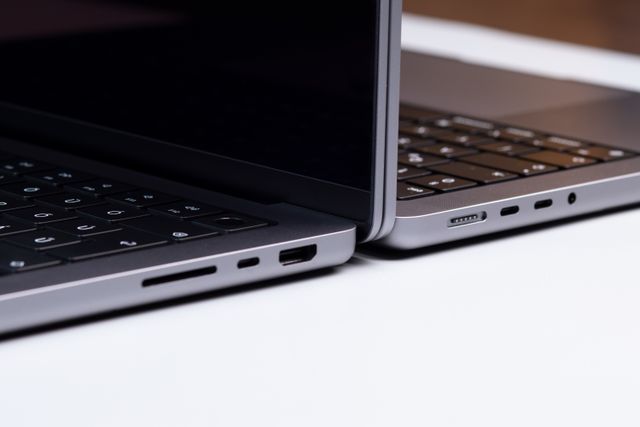
Several fundamental factors explain the Windows vs Mac resale value gap. Apple provides macOS updates for approximately 7 years from each model's release date, whilst the average Windows laptop receives shorter support windows. This extended software support keeps MacBooks functionally relevant longer. A five-year-old MacBook Pro runs the latest macOS with full security updates and app compatibility. Similarly aged Windows laptops often struggle with modern software demands.
Physical longevity reinforces this advantage. MacBooks last 5 to 8 years in everyday use, compared to 3 to 5 years for Windows laptops. The aluminium unibody construction withstands daily wear better than plastic alternatives, and MacBooks age more gracefully. Apple's environmental reporting confirms out-of-warranty repair rates declined 78% between 2015 and 2022, reflecting improved hardware reliability.
Supply and demand dynamics further support higher MacBook vs Windows laptops resale values. Demand for used Macs exceeds Windows laptops by a factor of two, whilst supply remains lower. To name just one example, buyers seeking affordable Mac laptops must shop used, as new MacBook Air models start above budget thresholds. This creates a seller's market where pre-owned MacBooks command premiums.
The Macintosh versus Windows ecosystem integration also plays a role. Features like AirDrop and iMessage create platform stickiness. Once users invest in multiple Apple devices, switching platforms becomes impractical and maintains consistent buyer demand for used MacBooks.
Processor generation affects resale pricing more than core count alone. An Intel Core i5 10th generation laptop outperforms an Intel Core i7 6th generation model despite the lower core designation. This happens because of architectural improvements and efficiency gains. Buyers prioritise recent processor generations (8th generation and above) that support current software and security features. So, laptops depreciate around 15-20% during the first year, with the steepest value loss occurring right after purchase.
Age becomes the dominant depreciation driver beyond the first year. Premium business models retain 40-60% of their original value after 2-3 years. Consumer variants hold only 30-40%. A three or four-year-old device commands higher resale prices than equipment sitting unused for six to eight years. Battery health affects buyer willingness to pay directly, as batteries designed to retain 80% capacity at maximum cycle count lose performance predictably. Functional batteries delivering 1.5-2 hours backup maintain value. Worn batteries that need replacement reduce quotes by a lot.
Specifications determine buyer interest in the MacBook vs Windows debate. Laptops featuring 8th generation processors or newer, 8GB-16GB RAM, and SSD storage sell faster than HDD-equipped alternatives. Gaming laptops with dedicated NVIDIA RTX or AMD Radeon GPUs retain value better than office machines, provided cooling systems and batteries remain healthy.
MacBooks significantly outperform Windows laptops in resale value, retaining 70-80% of their original price after two years compared to just 45-55% for premium Windows models and 25-40% for budget alternatives.
The numbers reveal a compelling investment case:
The 25-35% resale value advantage means MacBook owners recoup significantly more money when upgrading, making the higher initial investment worthwhile for those who upgrade regularly or value long-term cost efficiency.
The MacBook vs Windows resale value debate delivers a clear verdict to long-term investors. MacBooks retain 70-80% of their value after two years, whilst premium Windows laptops hold only 45-55%. This 25-35% gap stems from superior build quality and extended software support that drives higher market demand. You'll recoup by a lot more money when upgrading your MacBook because of this difference, making the higher original investment worthwhile over time.
Yes, MacBooks typically retain significantly better value than Windows laptops. After two years, MacBooks hold 70-80% of their original value, whilst premium Windows laptops retain only 45-55%. This 25-35% difference is driven by Apple's extended software support, superior build quality, consistent market demand, and the brand's ecosystem integration.
MacBooks depreciate approximately 15-20% during the first year, similar to Windows laptops. However, the key difference emerges in subsequent years. After 2-3 years, MacBooks still retain 70-80% of their original value, whereas Windows laptops hold only 30-60% depending on whether they're business or consumer models.
Processor generation, physical condition, and battery health are the primary factors. Recent processor generations (8th generation and above) command higher prices, whilst laptops with 8GB-16GB RAM and SSD storage sell faster than HDD alternatives. Battery health is crucial, as functional batteries maintaining 1.5-2 hours backup preserve value, whilst worn batteries requiring replacement significantly reduce resale prices.
Whilst premium Windows laptops retain better value than budget models, they still lag behind MacBooks due to shorter software support windows, greater model variety creating market fragmentation, and lower consistent demand. Business-class Windows models do command 25-40% premiums over consumer lines, but even these typically hold only 45-55% of their value after two years compared to MacBooks' 70-80%.
MacBooks typically last 5-8 years in everyday use, compared to 3-5 years for Windows laptops. Apple provides macOS updates for approximately 7 years from each model's release date, ensuring longer functional relevance. The aluminium unibody construction also withstands daily wear better than plastic alternatives, contributing to superior longevity and resale value.
You May Also Like:


50000+ - Devices Picked


0 Comments